
Yellowstone national park biodiversity
types of flora

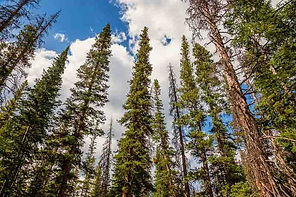
Douglas Fir (Pseudotsuga menziesii): Although it is present all across the park, the Douglas fir is abundant in the northern regions. These trees are equipped with thick bark, allowing them to tolerate low-intensity fire. Some trees in the Yellowstone forests are estimated to be several hundred years old, sporting fire scars from a past history of low-intensity ground fires. Its cones hang down and remain intact, with three-pronged bract between scales.
1,350 species of flowering plants including 1,150 native species are found in Yellowstone National Park. Around 80% of the park is covered by is forests and the vast majority of the tree growth consists of several conifer species. These conifer species along with other species include whitebark pine, Lodgepole pine, Engelmann spruce, subalpine fir, and limber pine which are found at higher elevations such as the Absarokas, Douglas firs, which dominate lower elevations (notably abundant in northern areas), Cottonwoods and willows grow which along streams, and stands of aspens occur all around the region.
.jpg)
Engelmann Spruce (Picea engelmannii): The Engelmann Spruce species dominate older forests in high elevation areas where there are extensive amounts of andesite, a type of volcanic rock. Engelmann spruce along with subalpine fir were able to dominate and thrive these forests as there was an absence of fire and overgrew other species such as the lodgepole pine. They have sharp, square needles and their cones hang down and remain intact but have no bract between scales.

Cottonwood (Populus section Aigeiros): The Engelmann Spruce species dominate older forests in high elevation areas where there are extensive amounts of andesite, a type of volcanic rock. Engelmann spruce along with subalpine fir were able to dominate and thrive these forests as there was an absence of fire and overgrew other species such as the lodgepole pine.

Lodgepole Pine (Pinus contorta): Lodgepole Pines, also known as twisted pine, and contorta pine, are the most common tree in Yellowstone. They cover 80% of the canopy and can grow up to 75 feet (22.86 metres). This species is dominant on rhyolitic soils which are poor in nutrients essential for fir and spruce. Lodgepole pines are common at higher elevations, such as the Absaroka Mountains and the Washburn Range. Their needles grow in groups of two and have short, cylindrical seed cones. Some American Indians tribes used the Lodgepole Pine to make the frames of their tipis or lodges, thus the name "Lodgepole" Pine.
Subalpine Fir (Abies lasiocarpa): The Subalpine Fir, also known as the Rocky Mountain fir, is the only true fir species in Yellowstone National Park. It grows up to 100 feet (30.48 metres), growing blunt flat needles and cones which grow upright and disintegrate on the tree. The bark of the tree is sooth and greyish white coloured, with resin blisters.


Limber Pine (Pinus flexilis): The Limber Pine, also known as the Rocky Mountain white pine, thrives in calcium-rich soil, and can grow up to 75 feet (22.86 metres). This species is a slow-growing but long lived sometimes taking several hundred years to reach maturity and can reach up to 1000 years of age.

Whitebark Pine (Pinus albicaulis): The Whitebark Pine, also known as a pitch pine, scrub pine, or creeping pine is a conifer tree that is native to the mountains of the western United States and Canada. They can grow up to 75 feet tall and mostly grow in areas above 7,000 feet (2133.6 metres). The Whitebark Pine's needles grow in groups of five. This species of conifer is classified as a keystone species as it:
-
regulates runoff by slowing the progress of snowmelt
-
reduces soil erosion by initiating early succession after fires and other disturbances
-
provides seeds that are high-energy food source for wildlife
The Whitebark Pine is an endangered species as it is threatened by various factors such as habitat loss, white pine blister rust, mountain pine beetle, fires and environmental effects (climate change),

Rocky Mountain Juniper (Juniperus scopulorum): The Rocky Mountain Juniper is a species of Juniper, native to western North America, Canada, British Columbia and southwest Alberta. This species can grow up to 30 feet tall (10 metres), with scale-like needles and small and fleshy cones. The bark of the tree is divided into narrow, flat ridges that are broken into thin, shredded, stringy strips whichcan be reddish or greyish-brown.
Other plant species include hundreds of types of wildflowers which thrive in various habitats across the park. Common species like phlox, lupines, cinquefoils, larkspurs, and Indian paintbrushes which bloom between April and September

Phlox
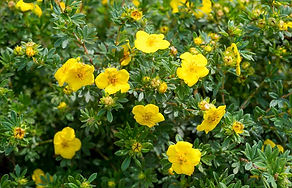
Cinquefoils

Larkspurs

Lupines
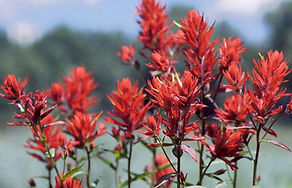
Indian Paintbrushes
Types of fauna
Yellowstone consists of abundant and diverse fauna, with nearly 300 species of birds,16 species of fish, five species of amphibians, six species of reptiles, and 67 species of mammals—including seven native ungulate species and two bear species.
MAMMALS (CARNIVORES)


Badger (Taxidea taxus):
-
Grows to 22–28 inches long
-
Light body with a dark stripe down back and darker feet
-
Has a broad head forms a wedge
-
Sides of the face are white with black patches
-
White stripe from nose extends towards the back
Habitat: The badger prefers to live in open areas such as grasslands where they can dig burrows in pursuit of their prey.
Diet: Ground squirrels, pocket gophers, small rodents and even ground-nesting birds and their eggs.
Predators: mountain lions, bears, wolves, coyotes and eagles.
Behaviour: Most badgers are solitary except in the months of summer and early fall; the mating season. Badgers live in burrows which are used for daytime resting sites, food storage, and giving birth. They are not true hibernators as they may on stay inactive for a month in winter. Badgers can live up to 14 years of age.
Black Bear (Ursus americanus):
-
Males weigh 210–315 pounds, females weigh 135–200 pounds
-
Adults stand about 3 feet at the shoulder
-
In Yellowstone, about 50% of black bears are black in color; others are brown, blond, and cinnamon
Habitat: The Black Bear likes forests as they are excellent tree climbers, but are also found in mountainous regions.
Diet: Rodents, insects, elk calves, cutthroat trout, pine nuts, grasses, and other vegetation.
Predators: Cubs are vulnerable to wolves, cougars, and grizzly bears.
Behaviour: Black Bears can climb trees as they are adapted to life in forest and along forest edges. They sleep all through winter, so they are considered true hibernators. Black Bears spend most of their time during fall and early winter feeding. In November, they locate or excavate a den on north-facing slopes between 5,800–8,600 feet (1,768–2,621 m), where they hibernate until late March. Males and Females are mostly solitary apart from the mating season which is May to early July. Birth occurs mid-January to early February where usually two cubs are born and the cubs are born blind, toothless, and almost hairless.

Bobcat (Lynx rufus):
-
Adult: 15–30 pounds
-
31–34 inches long
-
Color ranges from red-brown fur with indistinct markings to light buff with dark spotting; short tail; ear tufts
Habitat: The Bobcat prefers rocky areas and conifer forests.
Diet: Rabbits, hares, voles, mice, red squirrels, wrens, sparrows, grouse, sometimes deer and adult pronghorn
Predators: Mountain lions, coyotes, foxes, owls, wolves
Behaviour: Bobcats are nocturnal animals, meaning they are active during the night. they are well adapted to diverse habitats as forests, swamps, deserts, and even suburban areas. Bobcats are solitary like most felines, but each territory does overlap. as they have smaller range sizes so two or more females may reside within a male's home range.

Canada Lynx (Lynx canadensis):
-
Adult: 16–35 pounds
-
26–33 inches long
-
Gray brown fur with white, buff, brown on throat and ruff; tufted ears; short tail; hind legs longer than front.
-
Wide paws with fur in and around pads
Habitat: The Canada Lynx prefers cold conifer forests.
Diet: Snowshoe hares rodents, rabbits, birds, red squirrels, and other small mammals.
Predators: Wolves and coyotes
Behaviour: Canada Lynx are rarely seen throughout the park and in general, one of the reasons being that they are nocturnal animals like the Bobcat. They are solitary animals, they usually hunt and travel alone. The Canada Lynx mating season occurs from February to April. females give birth in logs, stumps, clumps of timber, or similar tangles of roots and branches where she will give birth to a litter, two or three kittens or as many as eight.

Cougar (Puma concolor):
-
Adult males weigh 145–170 pounds; females weigh 85–120 pounds
-
Length, including tail, 6.5–7.5 feet.
-
One of the largest cats in North America and a top predator native to Greater Yellowstone
-
Average life span: males, 8–10 years; females, 12–14 years
Habitat: The Cougar prefers rocky breaks and forested areas.
Diet: Elk, mule deer, sometimes red squirrels, porcupines, marmots, grouse, and moose
Predators: Wolves
Behaviour: Cougars, otherwise known as Mountain Lions are territorial, and may kill others of their species which tread on their home range. The male cougars territories often overlap with several females. In Yellowstone, males and females breed primarily from February through May and most kittens are born June through September. Cougars are solitary hunters who compete for their kills such as bears and wolves.

Coyote (Canis latrans):
-
Weigh 25–35 pounds
-
16–20 inches high at the shoulder
-
Coat colors range from tan to buff, sometimes gray, and with some orange on its tail and ears
-
Average life span 6 years; up to 13 years in the park
Habitat: The Coyote likes meadows, fields and grasslands
Diet: Voles, mice, rabbits, elk calves, and carrion
Predators: Wolves, mountain lions, and bears.
Behaviour: Coyotes are nocturnal animals but can also be active during the early morning and sunset. Coyotes hunt solitarily or in pairs but hunt in packs when the prey is a deer or other large animal. breeding season runs from late December through March, and pups are born in the early spring and litters typically range from four to seven.

Grey Wolf (Canis lupus):
-
Males weigh 100–130 pounds, females weigh 80–110 pounds.
-
26–36 inches tall at the shoulder, four to six feet long from nose to tail tip.
-
Two main color variations exist in Yellowstone in approximately equal proportions: black and gray.
-
Average lifespan in the park is four to five years. Average lifespan outside is two to three years
Habitat: The Grey Wolf lives in woodlands, forests, grasslands and deserts.
Diet: Elk, deer, bison, moose and smaller mammals
Predators: Cougars and coyotes
Behaviour: Grey wolves live and hunt in packs, ranging from 2 to 36 wolves, with the average pack size consisting of 6 wolves. The pack commonly consists of a breeding pair, their current offspring, a few yearlings and a few related and/or unrelated adult wolves. Wolves primarily mate in February and give birth to an average of five pups.


Grizzly Bear (Ursus arctos horribilis):
-
Males weigh 200–700 pounds, females weigh 200–400 pounds
-
adults stand about 31⁄2 feet at the shoulder
-
Varies from blond to black, often with pale-tipped guard hairs
-
In the Greater Yellowstone Ecosystem, many grizzly bears have a light-brown girth band
-
Long, curved claws.
Habitat: The Grizzly Bear lives in woodlands, forests, alpine meadows, and prairies
Diet: Rodents, insects, elk calves, cutthroat trout, roots, pine nuts, grasses, and large mammals
Predators: Wolves, cougars, and adult male grizzly bears
Behaviour: Grizzly Bears mate in spring and the female gives birth in the winter with 1–3 cubs. grizzly Bears are considered true hibernatorsas they sleep through the winter. They hibernate in dens created by digging. The dens in Greater Yellowstone are typically dug in sandy soils and located on the mid to upper onethird of mildly steep slopes. The den consists of an entrance, a short tunnel, and a chamber.
Long-tailed Weasel (Mustela frenata):
-
13–18 inches long
-
4.8–11 ounces
-
Fur is light brown above and buff to rusty orange below in summer; all white in winter, except for tail, which is black-tipped all year.
-
Long body, short legs, pointed face, long tail
Habitat: Long-tailed Weasels live in forests, open grassy meadows and marshes
Diet: Voles, pocket gophers, mice, ground and tree squirrels, rabbits birds, eggs, snakes, frogs, and insects
Predators: Great-horned owls, and the northern goshawk. Coyotes and both red and gray foxes
Behaviour: Long-tailed Weasels are solitary animals except during breeding and rearing of young. The breeding season is in early July and August and the female will have one litter of 6–9 young per year.

Marten (Martes americana):
-
18–26 inches long
-
1–3 pounds
-
Short limbs and long bushy tail
-
Fur varies from light to dark brown or black; irregular, buffy to bright orange throat patch.
Habitat: Found in conifer forests with understory of fallen logs and stumps; will use riparian areas, meadows, forest edges and rocky alpine areas.
Diet: Red- backed voles, red squirrels, snowshoe hares, flying squirrels, chipmunks, mice, shrews, birds, eggs, amphibians, reptiles, earthworms, insects, fruit, berries, and carrion.
Predators: Wolves and owls
Behaviour: Martens are solitary animals except in breeding season, July and August. The female will birth 1–5 young between mid-March to late April. The Marten is active throughout the year and mainly hunts on the ground.

Red Fox (Vulpes vulpes):
-
Adult males weigh 11–12 pounds; females weigh average 10 pounds
-
Average 43 inches long.
-
Several color phases; usually red fur with white-tipped tail, dark legs; slender, long snout
-
Average life span: 3–7 years; up to 11 years in Yellowstone.
Habitat: The Red Fox resides in edges of sagebrush/ grassland and within forests.
Diet: Voles, mice, rabbits, birds, amphibians, other small animals, carrion and some plants.
Predators: Coyotes, wolves, cougars
Behaviour: Red Foxes are solitary but mate with female from previous litter. They rarely howls or sing but they bark often. They are not oftenly seen as they are nocturnal animals, hunting in the dark.during the winter months, foxes may increase their activity around dawn and dusk, and even sometimes in broad daylight.

River Otter (Lontra canadensis):
-
40–54 inches long
-
10–30 pounds
-
Sleek, cylindrical body, small head, tail nearly one third of the body and tapers to a point webbed feet, short claws
-
Fur is dark dense brown
Habitat: The River Otter is generally found near water.
Diet: crayfish and fish, frogs, turtles, young muskrats or beavers.
Predators: Bobcats, coyotes, cougars, wolves, black bears and foxes.
Behaviour: River Otters are active all year round. They breed in late March through April and the female will give birth to one litter of two young per year. As they live near water, River Otters can swim underwater up to 6 miles per hour and for 2–3 minutes at a time. They tend to stay in the water as they are not agile or fast on land unless they find snow or ice. Here, they can move rapidly by alternating hops and slides reaching speeds of 15 miles per hour.

Short-tailed Weasel (Ermine) (Mustela erminea):
-
8–13 inches long
-
2.1–7 ounces
-
Very long body, short legs, pointed face, long tail
-
Males about 40% larger than females.
-
Fur is light brown above and white below in summer; all white in winter except for tail, which is black-tipped all year.
Habitat: The Ermine is found in willows and spruce forests.
Diet: Voles, shrews, deer mice, rabbits, rats, chipmunks, grasshoppers, and frogs
Predators: Great horned owls, goshawks, foxes, coyotes
Behaviour: Ermines breed in early to mid-summer and the female will give birth to 1 litter of 6–7 young per year. They are very agile and are able to leap repeatedly three times their length. Ermines usually hunt and move through rodent burrows such as voles and mice.

Wolverine (Gulo gulo):
-
38–47 inches long
-
13–31 pounds
-
Stocky, muscular with short legs, broad and rounded head, and small eyes with short rounded ears
-
Thick dark and glossy underfur and guard hair, sometimes white hair patches on the throat or chest
Habitat: The Wolverine prefers boreal forests, tundra, and mountainous regions
Diet: Rodents, birds, eggs, beavers, squirrels, marmots, mice, and vegetation (including whitebark pine nuts
Predators: Cougar, wolves, and bears
Behaviour: Wolverines are active all year round, intermittently throughout the day and the night. They are mostly solitary animals except when breeding in April to October and the female will give birth to a litter of 2–4 young each year in dens excavated in the snow.
MAMMALS (UNGULATES)

Bison (Bison bison):
-
Male (bull) weighs up to 2,000 pounds, female (cow) weighs up to 1,000 pounds
-
Long shaggy brown fur, a mane and beard under its chin and a long tail with a tuft of hair at the end
-
Can run up to 30 miles per hour
-
Big head with short black horns and a hump on its shoulders
Habitat: Summer in the grasslands, Winter: hydrothermal areas
Diet: Grasses, sedges, berries and lichen
Predators: Wolves, cougars, bears
Behaviour: The American Bison, otherwise referred to as an American Buffalo, is the largest land-dwelling mammal in North America. they form herds, directed by older females. Herds can have average about 20 bison during winter, an average of about 200 in summer and about 1,000 during the breeding season in July and August. The Bison calves are born in late April and May.
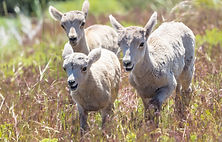
Bighorn Sheep (Ovis canadensis):
-
Adult male (ram): 174–319 pounds, including horns that can weigh 40 pounds, Adult female (ewe): up to 130 pounds
-
Average life span: males, 9–12 years; females 10–14 years
Habitat: Found in mountainous regions
Diet: Grasses, shrubby plants
Predators: Coyotes, golden eagles, cougars, bears, Canada lynx
Behaviour: Bighorn Sheep live in herds of up to 100 individuals but groups of 8-10 are more common. The males or rams, live apart from females and young during most of the year until mating season in November. The females, ewes give birth to 1-2 lambs in May.

Elk (Cervus Canadensis):
-
Males (bulls) weigh ~700 pounds and are ~five feet high at the shoulder
-
Females (cows) weigh ~500 pounds and are shorter
-
Calves are ~30 pounds at birth.
-
Bulls have antlers, grow in the spring and drop in March or April of the following year
Habitat: Found in coniferous forests, prairies, aspen parklands, sagebrush flats, eastern deciduous forests, the Rocky Mountains
Diet: Grasses, sedges, other herbs and shrubs, the bark of aspen trees, conifer needles, burned bark, aquatic plants
Predators: Coyotes, bobcats, black bears, wolves, cougars
Behaviour: Elk are one of the most abundant animals in Yellowstone National Park, and live in herds of 200-400 elk. Mating season occurs from early September to mid-October and the female gives birth between May and June.

Moose (Alces alces shirasi):
-
Adult male (bull) weighs close to 1,000 pounds
-
Female (cow) weighs up to 900 pounds
-
Young weigh 25–35 pounds at birth
-
Lives up to 20 years
Habitat: Found in marshy areas of meadows, lake shores, and along rivers.
Diet: leaves, bark, and twigs from trees and shrubs (native willow, aspen, and balsam fir trees)
Predators: Bears and wolves
Behaviour: Moose usually live alone or in small family groups. The mating season for the moose begins in late September to early October, where the female gives birth to one or two calves in late May or June.

Mountain Goat (Oreamnos americanus):
-
Mature male (billy) weighs 300 or more pounds
-
Female (nanny) weighs 150 pounds
-
Females’ horns curve less and are thinner and sometimes longer than males
-
Thick and long fur with coarse hollow guard hair
Habitat: Alpine habitat. Winter: steep, south-facing slopes, windblown ridge tops; Spring: south- and west-facing cliffs; Summer: meadows, cliffs, ravines, and forests
Diet: Lichens, ferns, grasses, herbs, shrubs, and deciduous or coniferous trees
Predators: Bears, wolves, eagles, and wolverines
Behaviour: The Mountain Goat is a non-native species to the Greater Yellowstone region, it was an introduced species which populated Yellowstone in the 1990s. The mating season starts in November, and the female gives birth to 1-2 kids on secluded beaches after scaling down large cliffs.

Mule Deer (Odocoileus hemionus):
-
Male (buck): 150–250 pounds
-
female (doe): 100–175 pounds
-
Summer coat: reddish; winter coat: gray-brown; white rump patch with black-tipped tail; brown patch on forehead; large ears.
-
Males grow antlers from April or May until August or September; shed them in late winter and spring.
Habitat: Brushy areas, coniferous forests, grasslands
Diet: Shrubs, forbs, grasses, conifers
Predators: Wolves, coyotes, cougars, and bears
Behaviour: The Mule Deer, also called the blacktail deer, are the most common deer throughout the park. The mating season for the Mule Deer lasts from October to November and the doe will give birth to to 1-4 fawns in May or June.

Pronghorn (Antilocapra americana):
-
Male (buck) weighs 100–125 pounds
-
Female (doe) weighs 90–110 pounds
-
Life span: 7–10 years
-
Both have horns but males are pronged
Habitat: Grasslands
Diet: Sagebrush, shrubs, forbs, grasses
Predators: Coyotes, bobcats, wolves, bears, and golden eagles.
Behaviour: The Pronghorn is a herding animal that resides in Yellowstone National Park. Its mating season is from mid-September and extends through early October. The fawns are then born in late May–June.

White-tailed Deer (Odocoileus virginianus):
-
Adults 150–250 pounds
-
Summer coat: red-brown; winter coat: gray-brown; throat and inside ears with whitish patches; belly, inner thighs, and underside of tail white
-
Males grow antlers from May until August; shed them in early to late spring.
Habitat: Streams and rivers
Diet: Shrubs, forbs, grasses, conifers
Predators: Wolves, coyotes, cougars, bears
Behaviour: The White-tailed Deer is not as common in the
Yellowstone region. The mating season for the White-tailed Deer is November and the female gives birth to 1-3 fawns in late May or June.
MAMMALS (RODENTS)

Beaver (Castor canadensis)

Golden-mantled Ground Squirrel (Spermophilus lateralis)

Least Chipmunk (Tamias minimus)
Montane Vole (Microtus montanus)


Pocket Gopher (Thomomys talpoides)

Red Squirrel (Tamiasciurus hudsonicus)

Uinta Ground Squirrel(Spermophilus armatus)

Yellow-bellied Marmot (Marmota flaviventris)
MAMMALS (Hares, Rabbits, Pika and bats)


Pika (Ochotona princeps)
Snowshoe Hare (Lepus americanus)
White-tailed Jackrabbit (Lepus townsendii)
Bats (many species)
birds
.jpg)


Bald Eagle (Haliaeetus leucocephalus)
Golden Eagle (Aquila chrysaetos)
Osprey (Pandion haliaetus)

Peregrine Falcon (Falco peregrinus anatum)

American White Pelican (Pelecanus erythrorhynchos)

California Gull (Larus californicus)

Caspian tern (Hydroprogne caspia)
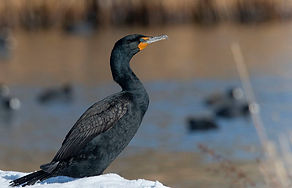


Double-crested Cormorant (Phalacrocorax auritus)
Common Loon (Gavia immer)
Trumpeter Swan (Cygnus buccinator)

Wilson’s Warbler (Cardellina pusilla)

Willow Flycatcher (Empidonax traillii)

Gray Catbird (Dumetella carolinensis)


Yellow-rumped Warbler (Setophaga coronata)
Dark-eyed Junco (Junco hyemalis)
Mountain Chickadee (Poecile gambeli)
American Robin (Turdus migratoriaus)


Black-backed Woodpecker (Picoides arcticus)
American Three-toed Woodpecker (P. dorsalis)
Hairy Woodpecker (P. villosus)

Horned Lark (Eremophila alpestris)

Brewer’s Blackbird (Euphagus cyanocephalus)

Western Meadowlark (Sturnella neglecta)

Brewer’s Sparrow (Spizella breweri)

Vesper Sparrow (Pooecetes gramineus)

Savannah Sparrow (Passerculus sandwichensis)

American dipper (Cinclus mexicanus)

Raven (Corvus corax)

Northern Flicker (Colaptes auratus)

Sandhill Cranes (Antigone canadensis)
Native Fish

Yellowstone Cutthroat Trout (Oncorhynchus clarkii bouvieri)

Arctic Grayling (Thymallus arcticus montanus)
.jpg)
Westslope Cutthroat Trout (Onchorhynchus clarkii lewisi)

Mountain Whitefish (Prosopium williamsoni)
.jpg)
Mottled Sculpin (Cottus bairdi)

Minnows: Utah chub (Gila atraria), Longnose dace (Rhinichthys cataractae), Redside shiner (Richardsonius balteatus), Speckled dace (Rhinichthys osculus)

Suckers: Mountain sucker (Catostomus platyrhynchus), Longnose sucker (Catostomus catostomus), Utah sucker (Catostomus ardens)
reptiles and amphibians

Bullsnake (Pituophis catenifer sayi)

Prairie Rattlesnake (Crotalis viridis)

Rubber Boa (Charina bottae)

Sagebrush Lizard (Sceloporus graciosus)

Common Gartersnake (Thamnophis sirtalis)

Terrestrial Gartersnake (Thamnophis elegans)

Boreal Chorus Frog (Pseudacris maculata)

Columbia Spotted Frog (Rana luteiventris)

Western Tiger Salamander (Ambystoma mavortium)

Western Toad (Anaxyrus boreas)

Plains Spadefoot Toad (Spea bombifrons)
Seasonal changes
Seasonal changes or fluctuations occurring in animal populations depend on factors like the migration of animal species such as bison, deer, elk, pronghorn, bighorn sheep, mountain goats, and birds, in search of food, water and favourable living and breeding conditions. Other factors that contribute to population changes is competition for resources, predation, and disease. Monitoring of species is regularly conducted at Yellowstone National Park, specifically species that are endangered. This is done to conserve and restore animal species important for the ecosystem to function.

Historical and current range of gray wolves.

Elk Population 1960-2019
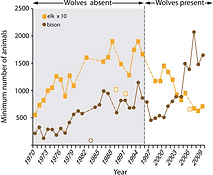
Elk and Bison populations, comparing the absence of Wolves and presence of Wolves

Moose and Wolf populations 1980-2019